
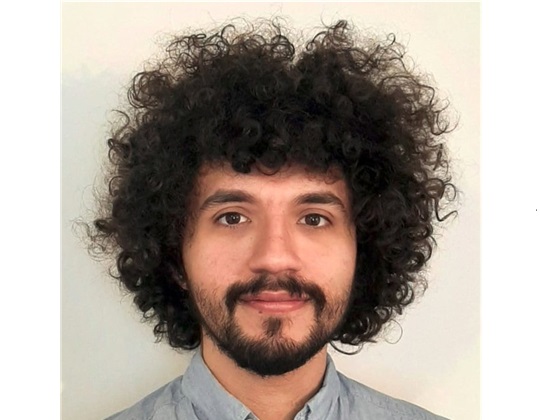
Researcher
Robotics & Autonomous Systems,
Royal Military Academy
Address
Avenue De La Renaissance 30, 1000 Brussels, Belgium
Contact Information
Call: –
Email: Evandro.Bernardes@mil.be
Publications
2024
- M. Denayer, J. D. Winter, E. Bernardes, B. Vanderborght, T. Verstraten, M. Denayer, J. D. Winter, E. Bernardes, B. Vanderborght, and T. Verstraten, “Comparison of Point Cloud Registration Techniques on Scanned Physical Objects," Sensors, vol. 24, iss. 7, 2024.
[BibTeX] [Abstract] [Download PDF] [DOI]
This paper presents a comparative analysis of six prominent registration techniques for solving CAD model alignment problems. Unlike the typical appro…
@article{denayer_comparison_2024, title = {Comparison of {Point} {Cloud} {Registration} {Techniques} on {Scanned} {Physical} {Objects}}, volume = {24}, copyright = {http://creativecommons.org/licenses/by/3.0/}, issn = {1424-8220}, url = {https://www.mdpi.com/1424-8220/24/7/2142}, doi = {10.3390/s24072142}, abstract = {This paper presents a comparative analysis of six prominent registration techniques for solving CAD model alignment problems. Unlike the typical appro...}, language = {en}, number = {7}, urldate = {2026-01-07}, journal = {Sensors}, author = {Denayer, Menthy and Winter, Joris De and Bernardes, Evandro and Vanderborght, Bram and Verstraten, Tom and Denayer, Menthy and Winter, Joris De and Bernardes, Evandro and Vanderborght, Bram and Verstraten, Tom}, month = mar, year = {2024}, note = {Company: Multidisciplinary Digital Publishing Institute Distributor: Multidisciplinary Digital Publishing Institute Institution: Multidisciplinary Digital Publishing Institute Label: Multidisciplinary Digital Publishing Institute Publisher: publisher}, keywords = {CAD model alignment, digital twins, point cloud datasets, point cloud registration}, file = {Full Text PDF:/home/evandro/snap/zotero-snap/common/Zotero/storage/E5V5UPGH/Denayer et al. - 2024 - Comparison of Point Cloud Registration Techniques on Scanned Physical Objects.pdf:application/pdf}, }
2023
- E. Bernardes, F. Boyer, and S. Viollet, “Modelling, control and simulation of a single rotor UAV with swashplateless torque modulation," Aerospace Science and Technology, vol. 140, p. 108433, 2023.
[BibTeX] [Abstract] [Download PDF] [DOI]
Single rotor-base unmanned aerial vehicles (UAVs) represent the most minimalistic design to implement an aerial vehicle. We describe here a mono-rotor UAV, also named mono-spinner, that uses torque modulation (also called swashplateless mechanism) to provide roll and pitch control without the need of a complicated swashplate mechanism. A full non-linear model of the mono-spinner based on the Euler-Poincaré theoretical framework is given including a description of the structure of the drone and its rotor control system. Mechanical properties, kinetic energy and all of the external forces of interest to derive the equations of motion are described. A novel, Lyapunov-stable, quaternion-based nonlinear control law based on the decomposition of the orientation quaternion into a spin component and a reduced orientation component is provided. Finally, simulation results based on parameters measured from a real implementation of a mono-spinner are produced.
@article{bernardes_modelling_2023, title = {Modelling, control and simulation of a single rotor {UAV} with swashplateless torque modulation}, volume = {140}, issn = {1270-9638}, url = {https://www.sciencedirect.com/science/article/pii/S1270963823003309}, doi = {10.1016/j.ast.2023.108433}, abstract = {Single rotor-base unmanned aerial vehicles (UAVs) represent the most minimalistic design to implement an aerial vehicle. We describe here a mono-rotor UAV, also named mono-spinner, that uses torque modulation (also called swashplateless mechanism) to provide roll and pitch control without the need of a complicated swashplate mechanism. A full non-linear model of the mono-spinner based on the Euler-Poincaré theoretical framework is given including a description of the structure of the drone and its rotor control system. Mechanical properties, kinetic energy and all of the external forces of interest to derive the equations of motion are described. A novel, Lyapunov-stable, quaternion-based nonlinear control law based on the decomposition of the orientation quaternion into a spin component and a reduced orientation component is provided. Finally, simulation results based on parameters measured from a real implementation of a mono-spinner are produced.}, urldate = {2026-01-07}, journal = {Aerospace Science and Technology}, author = {Bernardes, Evandro and Boyer, Frédéric and Viollet, Stéphane}, month = sep, year = {2023}, keywords = {Autopilot, Drone, Monorotor, Spinner, UAV}, pages = {108433}, file = {ScienceDirect Snapshot:/home/evandro/snap/zotero-snap/common/Zotero/storage/YA9E6ALD/S1270963823003309.html:text/html;Submitted Version:/home/evandro/snap/zotero-snap/common/Zotero/storage/7YKKBII7/Bernardes et al. - 2023 - Modelling, control and simulation of a single rotor UAV with swashplateless torque modulation.pdf:application/pdf}, } - E. Bernardes, “OrigaBot : origami-based reconfigurable robots for multi-modal locomotion," thesis PhD Thesis, 2023.
[BibTeX] [Abstract] [Download PDF]
Ce travail de thèse est organisé autour de deux axes bien distincts : la conception et la réalisation d’une structure 3D multistable et la conception et la réalisation d’un drone monorotor. Le point de rencontre de ces deux axes est l’origami qui permet de mettre en œuvre des structures mécaniques à la cinématique complexe tout en conservant une simplicité de mise en œuvre et une grande légèreté. Les mécanismes souples ont une grande variété d’applications pour la robotique : du biomimétisme à l’assistance chirurgicale, de nombreux systèmes peuvent bénéficier de l’utilisation de mécanismes souples. Les structures en origamis sont une sous-classe des mécanismes souples qui peuvent être construits à partir d’une fine plaque de matériau. Le projet OrigaBot a été lancé dans le but d’étudier des structures en origamis et leurs applications en robotique. En particulier, pour la création de robots volants autonomes. Dans cette thèse, j’ai d’abord réalisé une étude exhaustive de différents origamis. En particulier, la “Magic Ball" a été étudiée pour sa capacité à changer de forme, d’un sphéroïde à un cylindre, et la “tour de Kresling" pour ses propriétés bistables. Le manque d’une structure origami à flexion bistable dans la littérature nous a conduits à la conception de “l’Origami Bendy Straw". Cet origami présentant des propriétés de multistabilité unique pourra trouver de nombreuses applications robotiques, notamment pour des grippers.Dans un but de concevoir un nouveau type de robot volant autonome, nous avons décidé de concevoir un drone monorotor et donc extrêmement minimaliste. L’absence d’un second rotor fournissant un contre-couple fait tourner le robot constamment dans une direction, ce qui constitue un vrai défi en termes de contrôlabilité. Cependant, l’utilisation d’ailettes qui profitent du flux d’air du rotor pour ralentir la rotation a été étudiée. La structure origami appelée “tour de Kresling" a été choisie pour orienter ces ailettes. Nous avons étudié un système sans pas cyclique basé sur un rotor qui utilise une vitesse sinusoïdale pour contrôler la direction des forces appliquées au robot.Nous avons fait une étude théorique approfondie du monorotor et analysé les équations du mouvement du drone avec l’équation de Poincaré, une alternative à la méthode d’Euler-Lagrange. Nous avons aussi proposé une décomposition de l’orientation du robot qui dissocie la rotation incontrôlable de la composante contrôlable d’attitude réduite. Un contrôleur non linéaire agissant sur l’attitude réduite est dérivé et démontré avec une fonction de Lyapunov. Enfin, j’ai développé une simulation du système complet. Nous avons analysé des simulations dans lesquelles l’estimation du lacet est imprécise, un problème réel avec des gyroscopes et compas peu fiables. Nous avons aussi proposé un observateur qui utilise la composante d’orientation réduite contrôlable pour estimer l’erreur dans la composante de rotation incontrôlable. Enfin, nous avons montré l’utilité d’un tel observateur dans le but de détecter une instabilité introduite par le manque de fiabilité de l’estimation de l’angle de lacet.
@phdthesis{bernardes_origabot_2023, type = {thesis}, title = {{OrigaBot} : origami-based reconfigurable robots for multi-modal locomotion}, copyright = {Licence Etalab}, shorttitle = {{OrigaBot}}, url = {https://theses.fr/2023AIXM0143}, abstract = {Ce travail de thèse est organisé autour de deux axes bien distincts : la conception et la réalisation d'une structure 3D multistable et la conception et la réalisation d'un drone monorotor. Le point de rencontre de ces deux axes est l'origami qui permet de mettre en œuvre des structures mécaniques à la cinématique complexe tout en conservant une simplicité de mise en œuvre et une grande légèreté. Les mécanismes souples ont une grande variété d'applications pour la robotique : du biomimétisme à l'assistance chirurgicale, de nombreux systèmes peuvent bénéficier de l'utilisation de mécanismes souples. Les structures en origamis sont une sous-classe des mécanismes souples qui peuvent être construits à partir d'une fine plaque de matériau. Le projet OrigaBot a été lancé dans le but d'étudier des structures en origamis et leurs applications en robotique. En particulier, pour la création de robots volants autonomes. Dans cette thèse, j'ai d'abord réalisé une étude exhaustive de différents origamis. En particulier, la "Magic Ball" a été étudiée pour sa capacité à changer de forme, d'un sphéroïde à un cylindre, et la "tour de Kresling" pour ses propriétés bistables. Le manque d'une structure origami à flexion bistable dans la littérature nous a conduits à la conception de "l'Origami Bendy Straw". Cet origami présentant des propriétés de multistabilité unique pourra trouver de nombreuses applications robotiques, notamment pour des grippers.Dans un but de concevoir un nouveau type de robot volant autonome, nous avons décidé de concevoir un drone monorotor et donc extrêmement minimaliste. L'absence d'un second rotor fournissant un contre-couple fait tourner le robot constamment dans une direction, ce qui constitue un vrai défi en termes de contrôlabilité. Cependant, l'utilisation d'ailettes qui profitent du flux d'air du rotor pour ralentir la rotation a été étudiée. La structure origami appelée "tour de Kresling" a été choisie pour orienter ces ailettes. Nous avons étudié un système sans pas cyclique basé sur un rotor qui utilise une vitesse sinusoïdale pour contrôler la direction des forces appliquées au robot.Nous avons fait une étude théorique approfondie du monorotor et analysé les équations du mouvement du drone avec l'équation de Poincaré, une alternative à la méthode d'Euler-Lagrange. Nous avons aussi proposé une décomposition de l'orientation du robot qui dissocie la rotation incontrôlable de la composante contrôlable d'attitude réduite. Un contrôleur non linéaire agissant sur l'attitude réduite est dérivé et démontré avec une fonction de Lyapunov. Enfin, j'ai développé une simulation du système complet. Nous avons analysé des simulations dans lesquelles l'estimation du lacet est imprécise, un problème réel avec des gyroscopes et compas peu fiables. Nous avons aussi proposé un observateur qui utilise la composante d'orientation réduite contrôlable pour estimer l'erreur dans la composante de rotation incontrôlable. Enfin, nous avons montré l'utilité d'un tel observateur dans le but de détecter une instabilité introduite par le manque de fiabilité de l'estimation de l'angle de lacet.}, urldate = {2026-01-07}, school = {Aix-Marseille}, author = {Bernardes, Evandro}, collaborator = {Viollet, Stéphane}, month = apr, year = {2023}, keywords = {796, Caractéristique d'Euler-Poincaré, Contrôle non-Linéaire, Drones, Équations d'Euler-Lagrange, Fonctions quaternioniennes, Nonlinear control, Origami, Quaternion, Reconfigurable, Robotics, Robotique, Robotique molle, Robotique souple, Soft robotics, Systèmes adaptatifs (technologie)}, file = {Full Text PDF:/home/evandro/snap/zotero-snap/common/Zotero/storage/7M4282BZ/Bernardes - 2023 - OrigaBot origami-based reconfigurable robots for multi-modal locomotion.pdf:application/pdf}, }
2022
- E. Bernardes and S. Viollet, “Quaternion to Euler angles conversion: A direct, general and computationally efficient method," PLOS ONE, vol. 17, iss. 11, p. e0276302, 2022.
[BibTeX] [Abstract] [Download PDF] [DOI]
Current methods of the conversion between a rotation quaternion and Euler angles are either a complicated set of multiple sequence-specific implementations, or a complicated method relying on multiple matrix multiplications. In this paper a general formula is presented for extracting the Euler angles in any desired sequence from a unit quaternion. This is a direct method, in that no intermediate conversion step is required (no quaternion-to-rotation matrix conversion, for example) and it is general because it works with all 12 possible sequences of rotations. A closed formula was first developed for extracting angles in any of the 12 possible sequences, both “Proper Euler angles” and “Tait-Bryan angles”. The resulting algorithm was compared with a popular implementation of the matrix-to-Euler angle algorithm, which involves a quaternion-to-matrix conversion in the first computational step. Lastly, a single-page pseudo-code implementation of this algorithm is presented, illustrating its conciseness and straightforward implementation. With an execution speed 30 times faster than the classical method, our algorithm can be of great interest in every aspect.
@article{bernardes_quaternion_2022, title = {Quaternion to {Euler} angles conversion: {A} direct, general and computationally efficient method}, volume = {17}, issn = {1932-6203}, shorttitle = {Quaternion to {Euler} angles conversion}, url = {https://journals.plos.org/plosone/article?id=10.1371/journal.pone.0276302}, doi = {10.1371/journal.pone.0276302}, abstract = {Current methods of the conversion between a rotation quaternion and Euler angles are either a complicated set of multiple sequence-specific implementations, or a complicated method relying on multiple matrix multiplications. In this paper a general formula is presented for extracting the Euler angles in any desired sequence from a unit quaternion. This is a direct method, in that no intermediate conversion step is required (no quaternion-to-rotation matrix conversion, for example) and it is general because it works with all 12 possible sequences of rotations. A closed formula was first developed for extracting angles in any of the 12 possible sequences, both “Proper Euler angles” and “Tait-Bryan angles”. The resulting algorithm was compared with a popular implementation of the matrix-to-Euler angle algorithm, which involves a quaternion-to-matrix conversion in the first computational step. Lastly, a single-page pseudo-code implementation of this algorithm is presented, illustrating its conciseness and straightforward implementation. With an execution speed 30 times faster than the classical method, our algorithm can be of great interest in every aspect.}, language = {en}, number = {11}, urldate = {2022-12-19}, journal = {PLOS ONE}, author = {Bernardes, Evandro and Viollet, Stéphane}, month = nov, year = {2022}, note = {Publisher: Public Library of Science}, keywords = {Algorithms, Complex numbers, Inertia, Permutation, Programming languages, Robotics, Sequence alignment, Software tools}, pages = {e0276302}, file = {Full Text PDF:/home/evandro/snap/zotero-snap/common/Zotero/storage/ZYTTEPK7/Bernardes and Viollet - 2022 - Quaternion to Euler angles conversion A direct, g.pdf:application/pdf;Full Text PDF:/home/evandro/snap/zotero-snap/common/Zotero/storage/J8JNQID9/Bernardes and Viollet - 2022 - Quaternion to Euler angles conversion A direct, g.pdf:application/pdf}, }
2021
- E. Bernardes and S. Viollet, “Design of an origami bendy straw for robotic multistable structures," Journal of Mechanical Design, vol. 144, iss. March, p. 1–11, 2021.
[BibTeX] [Abstract] [DOI]
This paper presents a soft cylindrical multi-stable origami structure based on “bendy straws”, consisting of multiple conical frusta mimicking the structure of a flexible drinking straw. These frusta are connected in such a way that the whole structure is axially multi-stable, having a stable compressed state in which its smallest frustum is collapsed. The bendy straw structure can also be modified so that the smallest frustum collapses only partially, keeping the structure in a bent state. We studied the geometry of a similar structure consisting of polygonal frusta instead of conical ones, and used this geometry to design a non-rigidly foldable origami pattern folding into a similar origami bendy straw structure. Most of the origami structures presented so far have been modeled from rigidly foldable origami patterns: these origami structures do not rely on deformation, and cannot use it to their advantage; whereas the non-rigid origami structure presented here features multi-stability. We have established that this origami structure is not only axially multi-stable, but that it can also be kept in a bent state, thanks to the use of pop-through defects (PTDs). The origami bendy straws studied here were made from paper (with a density of 90g/m2) bi-laminated with a 42.5-micron thick plastic film. A digital dynamometer was used to study the forces required to compress and expand a single origami bendy straw, create and reverse a PTD, and bend an origami bendy straw using PTDs.
@article{bernardes_design_2021, title = {Design of an origami bendy straw for robotic multistable structures}, volume = {144}, issn = {1050-0472}, doi = {10.1115/1.4052222}, abstract = {This paper presents a soft cylindrical multi-stable origami structure based on “bendy straws”, consisting of multiple conical frusta mimicking the structure of a flexible drinking straw. These frusta are connected in such a way that the whole structure is axially multi-stable, having a stable compressed state in which its smallest frustum is collapsed. The bendy straw structure can also be modified so that the smallest frustum collapses only partially, keeping the structure in a bent state. We studied the geometry of a similar structure consisting of polygonal frusta instead of conical ones, and used this geometry to design a non-rigidly foldable origami pattern folding into a similar origami bendy straw structure. Most of the origami structures presented so far have been modeled from rigidly foldable origami patterns: these origami structures do not rely on deformation, and cannot use it to their advantage; whereas the non-rigid origami structure presented here features multi-stability. We have established that this origami structure is not only axially multi-stable, but that it can also be kept in a bent state, thanks to the use of pop-through defects (PTDs). The origami bendy straws studied here were made from paper (with a density of 90g/m2) bi-laminated with a 42.5-micron thick plastic film. A digital dynamometer was used to study the forces required to compress and expand a single origami bendy straw, create and reverse a PTD, and bend an origami bendy straw using PTDs.}, number = {March}, journal = {Journal of Mechanical Design}, author = {Bernardes, Evandro and Viollet, Stéphane}, year = {2021}, keywords = {design of innovative devices, multistability, origami, origami-inspired mechanism, soft robotics}, pages = {1--11}, file = {PDF:/home/evandro/snap/zotero-snap/common/Zotero/storage/3QPYGT5T/Bernardes, Viollet - 2021 - Design of an origami bendy straw for robotic multistable structures.pdf:application/pdf;Snapshot:/home/evandro/snap/zotero-snap/common/Zotero/storage/7KZERQBA/Design-of-an-Origami-Bendy-Straw-for-Robotic.html:text/html;Submitted Version:/home/evandro/snap/zotero-snap/common/Zotero/storage/DKIXKT9X/Bernardes and Viollet - 2021 - Design of an Origami Bendy Straw for Robotic Multi.pdf:application/pdf}, }
2020
- E. Bernardes, S. Viollet, and T. Raharijaona, “A Three-Photo-Detector Optical Sensor Accurately Localizes a Mobile Robot Indoors by Using Two Infrared Light-Emitting Diodes," IEEE Access, vol. 8, p. 87490–87503, 2020.
[BibTeX] [Abstract] [DOI]
Indoor positioning systems are facing to the demand of large-scale industrial applications in mobile robotics. It is still challenging to create an indoor positioning system that is easily embeddable, accurate, robust and power efficient. We constructed an easily embeddable, low-power optical sensor named InLock without lens to localize a mobile robot indoors moving at 0.20m/s with an accuracy inferior to 10cm for the position and 0.1rad for the heading by using only three photo-detectors (PDs) and two infrared Light-Emitting Diodes (LEDs). (i) We modelled the optical sensor based on only three photo-detectors and two infrared LEDs by taking into account radiometric properties. (ii) We constructed the optical sensor by optimizing the geometry of the beacon and the receiver. (iii) We implemented and validated online estimation algorithms for an operating range at a height up to 3m by using an extended Kalman filter and a complementary filter. Our results showed that modelling the optical sensor so that it takes into account radiometric properties and it optimizes the geometry of the beacon can enhance the accuracy of the indoor positioning system.
@article{bernardes_three-photo-detector_2020, title = {A {Three}-{Photo}-{Detector} {Optical} {Sensor} {Accurately} {Localizes} a {Mobile} {Robot} {Indoors} by {Using} {Two} {Infrared} {Light}-{Emitting} {Diodes}}, volume = {8}, issn = {21693536}, doi = {10.1109/ACCESS.2020.2992996}, abstract = {Indoor positioning systems are facing to the demand of large-scale industrial applications in mobile robotics. It is still challenging to create an indoor positioning system that is easily embeddable, accurate, robust and power efficient. We constructed an easily embeddable, low-power optical sensor named InLock without lens to localize a mobile robot indoors moving at 0.20m/s with an accuracy inferior to 10cm for the position and 0.1rad for the heading by using only three photo-detectors (PDs) and two infrared Light-Emitting Diodes (LEDs). (i) We modelled the optical sensor based on only three photo-detectors and two infrared LEDs by taking into account radiometric properties. (ii) We constructed the optical sensor by optimizing the geometry of the beacon and the receiver. (iii) We implemented and validated online estimation algorithms for an operating range at a height up to 3m by using an extended Kalman filter and a complementary filter. Our results showed that modelling the optical sensor so that it takes into account radiometric properties and it optimizes the geometry of the beacon can enhance the accuracy of the indoor positioning system.}, journal = {IEEE Access}, author = {Bernardes, Evandro and Viollet, Stephane and Raharijaona, Thibaut}, year = {2020}, keywords = {complementary filter, Indoor positioning system, infrared light communication, Kalman filter, LED, robot's localization}, pages = {87490--87503}, file = {PDF:/home/evandro/snap/zotero-snap/common/Zotero/storage/IRP34CKH/09089000.pdf:application/pdf}, }
2016
- M. O. Domingues, O. Mendes, M. K. Kaibara, V. E. Menconi, and E. Bernardes, “Explorando a transformada wavelet contínua," Revista Brasileira de Ensino de Física, vol. 38, p. e3314, 2016.
[BibTeX] [Abstract] [Download PDF] [DOI]
A transformada wavelet contínua constitui poderosa ferramenta para análise multiescala de dados. Ela tem amplas aplicações na Física, na Matemática, nas Ciências Naturais e, inclusive, grande apelo nas engenharias, computação e áreas de tecnologia e inovação. Do ponto de vista introdutório, a transformada wavelet tem sido abordada amplamente em trabalhos anteriores. Assim, esta apresentação dá ênfase ao uso dessa técnica em situações teóricas e práticas que normalmente não são exploradas; porém fundamentais para um uso mais adequado, ou mesmo correto, dessa ferramenta. Um embasamento consistente possibilita, sobretudo, uma extensão de sua aplicação para novas pesquisas, facilitadas pela disponibilidade de programas e ferramentas gratuitas e, até, várias dessas sob a forma de recursos de livre distribuição (free softwares). Por critério de escolha dos autores, apresentam-se, neste artigo, conceitos e exemplos de técnicas que podem ser de grande interesse para vários tipos de estudos na Física e em outras áreas correlatas. Este texto destina-se a pesquisadores, professores e estudantes de pós-graduação, com a possibilidade de atender ainda necessidades de estudantes dos últimos anos de graduação.
@article{domingues_explorando_2016, title = {Explorando a transformada wavelet contínua}, volume = {38}, issn = {1806-1117, 1806-9126}, url = {https://www.scielo.br/j/rbef/a/QG7xfTNbbWCbPkG3n9d6KRL/?lang=pt}, doi = {https://doi.org/10.1590/1806-9126-RBEF-2016-0019}, abstract = {A transformada wavelet contínua constitui poderosa ferramenta para análise multiescala de dados. Ela tem amplas aplicações na Física, na Matemática, nas Ciências Naturais e, inclusive, grande apelo nas engenharias, computação e áreas de tecnologia e inovação. Do ponto de vista introdutório, a transformada wavelet tem sido abordada amplamente em trabalhos anteriores. Assim, esta apresentação dá ênfase ao uso dessa técnica em situações teóricas e práticas que normalmente não são exploradas; porém fundamentais para um uso mais adequado, ou mesmo correto, dessa ferramenta. Um embasamento consistente possibilita, sobretudo, uma extensão de sua aplicação para novas pesquisas, facilitadas pela disponibilidade de programas e ferramentas gratuitas e, até, várias dessas sob a forma de recursos de livre distribuição (free softwares). Por critério de escolha dos autores, apresentam-se, neste artigo, conceitos e exemplos de técnicas que podem ser de grande interesse para vários tipos de estudos na Física e em outras áreas correlatas. Este texto destina-se a pesquisadores, professores e estudantes de pós-graduação, com a possibilidade de atender ainda necessidades de estudantes dos últimos anos de graduação.}, language = {pt}, urldate = {2026-01-07}, journal = {Revista Brasileira de Ensino de Física}, author = {Domingues, M. O. and Mendes, O. and Kaibara, M. K. and Menconi, V. E. and Bernardes, E.}, year = {2016}, note = {Publisher: Sociedade Brasileira de Física - SBF}, keywords = {análise de sinais, sinais multiescala, wavelet}, pages = {e3314}, file = {Full Text PDF:/home/evandro/snap/zotero-snap/common/Zotero/storage/RFEHAPNZ/Domingues et al. - 2016 - Explorando a transformada wavelet contínua.pdf:application/pdf}, }
